
Fabian Graf at AUREA: I Followed My Doubts Instead of My Heart
At forty-five he asked himself what he was passionate about and found he had no answer. What he did next, and the four steps he used to find one, is the most practical account of locating a purpose you'll hear.
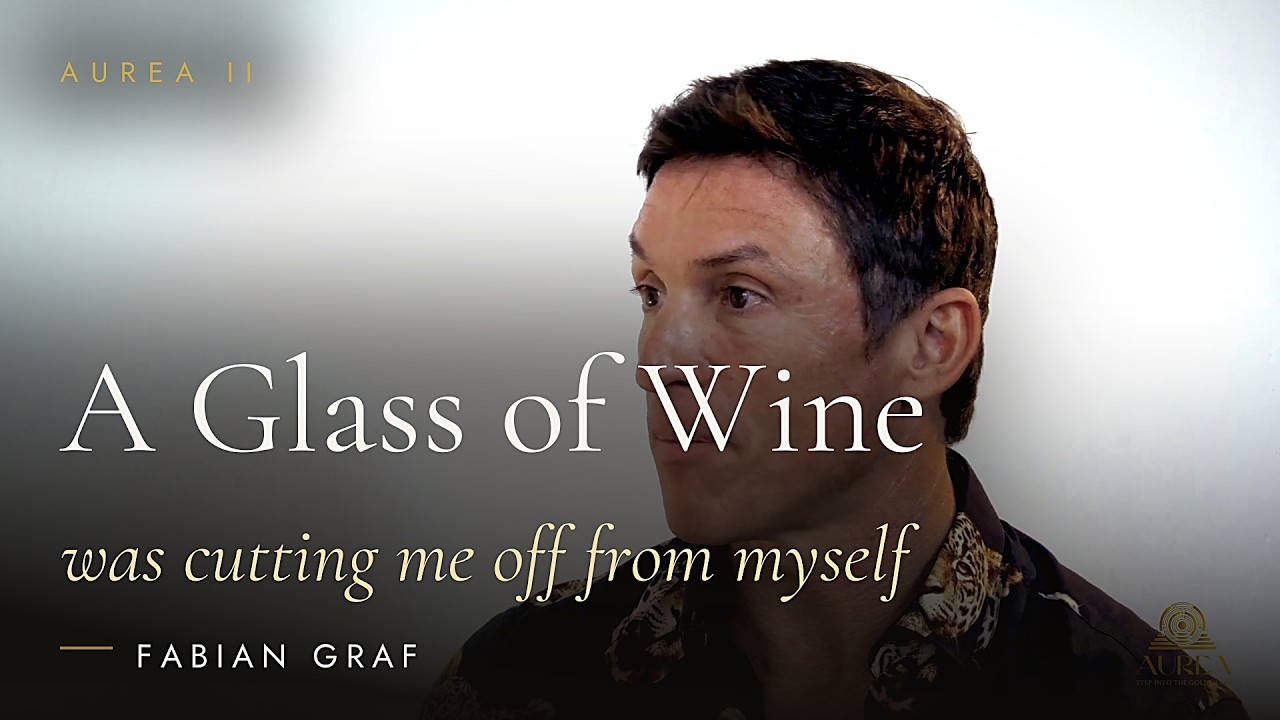
Fabian Graf is Belgian, has lived in Miami for twenty-four years, and had built a successful life in commercial real estate.
At forty-five he asked himself two questions. How can I serve? and what am I passionate about? He discovered he could not answer either one.
"I felt very odd. I felt scared. I felt terrified to continue my life without a purpose, without something that was a driving force."
Why he followed his doubts instead of his heart
Asked what he would say to someone torn between two directions, he does not offer a framework. He offers a confession.
"I've always known that when I follow my heart, it was always on point. And then there were times in my life where I had doubts, and I decided to follow my doubts instead of following my heart."
Read that again, because it is a more precise description of how people go wrong than any amount of theory. He knew. He had a reliable instrument and a track record of it being right, and in the moments that counted he consulted the fear instead.
He is also unwilling to let the standard advice off the hook:
"Get out of your head, into your heart. I know that sounds cliché. Hearing it is easy. Going through it was very different."
What his four-step process actually looks like
1. Get clear, which for him meant get clean.
He stopped drinking entirely. And he is specific that this was not about a problem:
"I wasn't a big drinker. But just even a glass of wine here and there was altering my connection with myself."
That is a much higher bar than most people set. Is this putting the smallest distance between me and my own signal at exactly the moment he needed the signal to be readable.
2. Get out of the environment.
Isolation, or nature. Off the day-to-day, the job, the earning, what he calls the rat wheel, long enough to actually feel yourself.
The lockdown did this to him by force, and he describes the realisation it produced with some embarrassment: he had not spent meaningful time alone with himself in a very long time.
What followed came in sequence, each thing unlocking the next. Vivid dreams returned. Then the strength to journal again. Then meditation. Then the mountains of Colorado.
3. Ask the hard questions.
What am I really doing? What is my purpose? What am I passionate about? What do I love?
And the one that broke it open for him:
"If I didn't have to make money, if I had all the money in the world, what would I just love to do?"
He is clear about what that question is designed to remove:
"We let money hold us back. Money, or status, or the way we perceive people looking at us."
4. Give it enough time to actually answer.
What happened the night his ceremony didn't work
The most honest part of the story is the part that failed.
He went to Tulum during a full moon and a full eclipse, sensing something was there. He entered a ceremony with a clear intention (clarity and vision) and lay on the grass under an enormous moon, asking what he was supposed to do.
What he got was not gentle. He describes three hours of one message, delivered with a force he did not expect:
"What to do. You do it now. You don't wait."
And then the next morning:
"I woke up with no clarity and no vision. I was like, wow, I did all of this, for what?"
He did not force it. He let it go and carried on.
It arrived a day later, lying quietly with his heart repeating one word (nature) while he turned over a business idea he had been considering, a hard twelve-day trek in the mountains with CEOs. He noticed he felt no drive for the business at all. The drive was in the mountains themselves: the training, the climbing, the running.
And then it dropped.
"Holy cow. I'm supposed to protect our nature."
Not the abstract knowledge that someone should. Full ownership.
"I have to be the driver. No matter if there is a company or not, or a government. I'm going to do whatever it takes."
His life changed direction from one day to the next.
How a stranger on a Zoom call confirmed everything
Then the confirmation arrived from outside, which is often how it goes.
A reforestation company contacted him out of nowhere (inexplicably, since his entire professional profile said commercial real estate). They regenerate soil and regrow forest with biodiversity at scale in the Amazon, and they do it by employing the people who own the land and making them partners.
What struck him was not the technology. It was the man on the screen.
"He was very nerdy. Not the type of person I'd normally be drawn to. But he was speaking with so much passion. I looked at him and thought: oh my God, this is me when I'm passionate. And that's when I realised I had lost true passion for something."
And underneath that, the shift he had actually been looking for the whole time:
"Most of my life I was trying to figure out an angle, always asking what's in it for me. Survival mode. And for once it was something way above me. That was exciting."
What this means if you're stuck between two paths
You probably do not have an information problem. Fabian describes himself as having been shallow across many topics and failing to listen to the one instrument that had never been wrong.
So the work is not acquiring a purpose. It is removing everything sitting between you and the answer you already have: the drink, the noise, the environment, and the money question you have never let yourself answer honestly.
Then give it long enough. His came a full day after he had given up on getting it.
Watch the full conversation above.
Frequently asked questions
What does Fabian Graf mean by "following his doubts instead of his heart"?
His heart was always on point when he followed it, but in the moments that counted, he consulted the fear instead. Not because he didn't know the answer, but because he had a reliable instrument and chose not to trust it.
What are the four steps in his process?
Get clear (which for him meant getting fully clean, even cutting out an occasional glass of wine), get out of the environment (isolation or nature, off the daily grind), ask the hard questions (starting with "if I didn't have to make money, what would I love to do?"), and give it enough time to actually answer.
Did the ceremony in Tulum give him the answer he wanted?
No. He woke up the next morning with no clarity and no vision, despite an intense night under a full moon and eclipse. The answer arrived a full day later, unforced, while he was thinking about something else entirely: one word repeating in his heart (nature).
What confirmed he was on the right path?
A reforestation company contacted him out of nowhere, despite his entire professional background being commercial real estate. Watching the founder speak with passion on a Zoom call, he recognized himself and realized he'd lost touch with that same passion for anything in his own life.
Back to Wisdom