
Adam Silberstein at AUREA: Nobody at the Top Got There Alone
An executive coach to CEOs of public companies on the thing 70,000 of the world's top leaders quietly do every month, and why almost nobody outside those rooms knows it's the single most valued part of the whole arrangement.
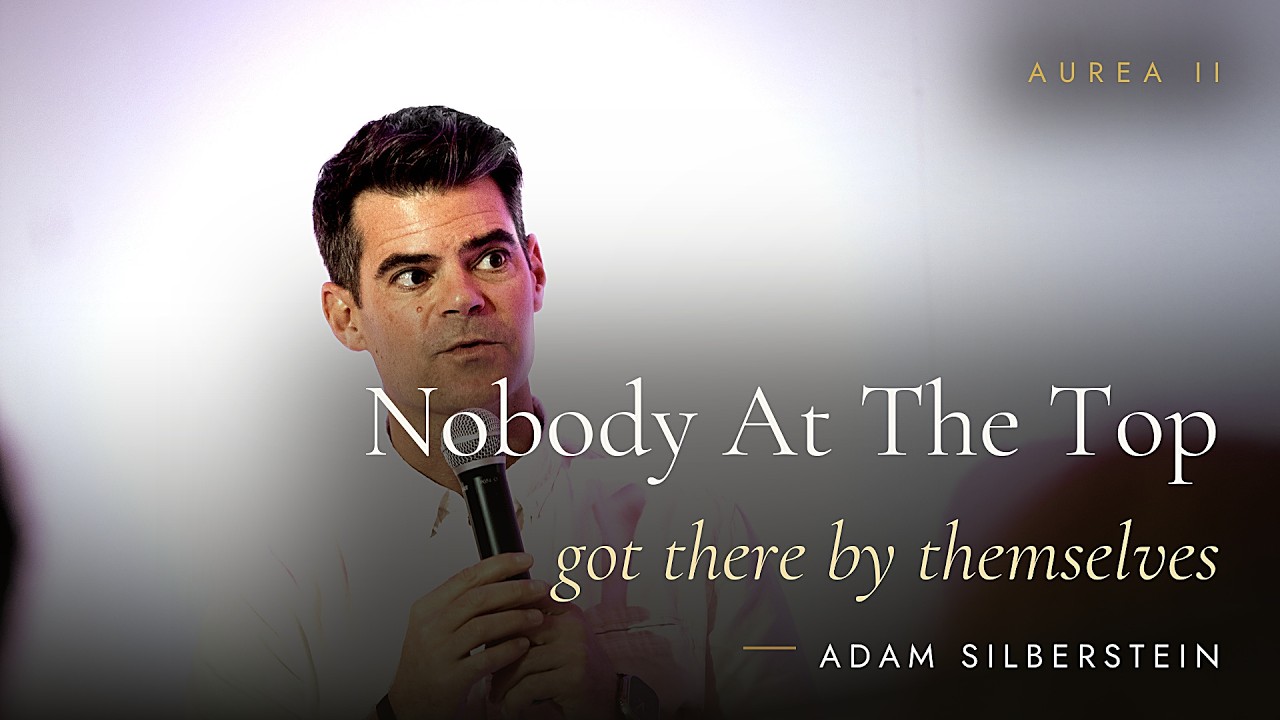
Adam Silberstein coaches startup founders, C-suites and CEOs of publicly traded companies. What he is most interested in, though, is narrower than that. He came to AUREA to hand the room something the people he works with pay a great deal for.
He opened the way he opens every retreat he runs, including for private equity in New York and tech founders in San Francisco: breath and appreciation.
"The two most powerful tools we have access to at any time."

What almost nobody in the room actually knew
He is deeply involved in EO and YPO, the Entrepreneurs' Organization and Young Presidents' Organization. Together, worldwide, they run to more than seventy thousand members, responsible for revenue he puts in the trillions.
Then he asked how many people knew what those members actually do together. Almost nobody did.
"Ninety percent or more of those seventy thousand members come together in small, confidential peer groups. Once a month, for four hours, to support each other and become better humans."
They're called forums. Four hours a month, plus two or three days a year on retreat, from people who are, as he points out, catastrophically short on time.
And the part that should stop you:
"Out of all the value in those organisations, forum is voted number one. That's what they get the most out of."
The room where they can stop performing. Not the access. Not the deal flow.
Which produced his question for AUREA:
"Why is it only reserved for those people?"
Why the self-made story isn't true
He names the myth directly, and he has better evidence against it than most people offering an opinion on it.
"There's this story that somehow those people at the top got there themselves. What I've seen is a direct correlation between tribe, community, support, and that level of success."
He is also unsentimental about why it's needed, and his description of events like the one he was standing at is uncomfortably accurate:
"You come to these things and everybody says it's great, I'm crushing it, so blessed. What they really want to say is: I'm stressed, I don't know what I'm going to do, I'm overwhelmed."
What rules actually make a room safe
This is the transferable part, and it's four rules.
Confidential. Phones off. Fully present. What is said in the room stays in the room.
No fixing. You are not there to be repaired by the other people. He points out that this is precisely why most people don't open up in the first place. They don't want to be handed a plan; they lack courage less than they resist being fixed.
No shoulding. No advice.
Experience share instead. This is the mechanism that makes the other three work, and it's a discipline:
"Here's what worked for me. Here's what didn't. I have no idea what you should do."
Sit with how hard that is. You are with someone whose situation you recognise exactly, whose pain you can feel because you were there last year, and the rule is that you still don't get to tell them what to do. You only get to describe your own road.

The exercise, and what it exposed
Rather than describe peer learning, he ran it. He calls it stepping in: he makes a statement, and if it's true for you, you stand.
"This is the most vulnerable and open you've ever been without even opening your mouth."
Some of what he asked, and what the room revealed about itself:
Stand if you're in a confidential peer group that meets regularly. Only ten to twenty percent stood.
Stand if you often feel alone, as if the people around you just don't get it.
Stand if you struggle with self-confidence.
Stand if you have a non-family mentor in your life.
Stand if you're on the verge of burnout, or already there.
Stand if you know how much money is enough.
Then he opened it to the room, and the statements people volunteered are their own kind of document: paralysis by analysis. Being more comfortable giving than receiving. Loneliness on the entrepreneurial journey. Knowing you're gifted and having no idea how to build anything on it. Last year being a down year.
His point about why this works is the one to keep:
"You start to build compassion for the human experience. You realise people who look successful on the outside are struggling with the same exact things. And then you can build self-compassion: it's okay to struggle with self-confidence, because so many others do. I'm not just broken."
What two things he asked everyone to do
Find a mentor. To everyone still sitting on that one, he said: write down the first name that comes to mind right now.
"You don't have to pay this person. There are so many people out there who want to support and help. It's up to the mentee to ask for it."
Get into a peer group, or start one. If you qualify for EO or YPO, look at them. If not, build your own; he founded one in Miami himself. And on the practicalities, he is refreshingly unprecious:
"It's actually pretty simple. I guarantee you can ask ChatGPT and it'll give you a ton of information on how to run one. I've done it."
Why the only real barrier is believing you don't need this
The most successful people you can name are not doing it on willpower and a morning routine. They are sitting in a confidential room once a month, with phones off, telling four or five peers the truth. They rate that as the most valuable thing they get anywhere.
The rules are free. Confidential, no fixing, no shoulding, experience share only. You could start one this month with four people who are in it as deep as you are.
The only real barrier is the belief that you're supposed to manage without it.
Watch the full talk above.
Frequently asked questions
What do EO and YPO members actually value most?
Confidential peer groups called forums, where about ninety percent of the 70,000+ members meet monthly for four hours to support each other. Out of everything those organizations offer, forum is voted number one. Not access or deal flow.
What are the rules that make a peer support room actually work?
Four: confidential (phones off, what's said stays said), no fixing (you're not there to be repaired), no shoulding (no advice), and experience-share instead: "here's what worked for me, here's what didn't, I have no idea what you should do."
What did the "stepping in" exercise reveal about the room?
Only ten to twenty percent were in a confidential peer group that met regularly, despite a room full of accomplished people. Many stood for feeling alone, struggling with self-confidence, or being on the verge of burnout. Proof that people who look successful are struggling with the same things everyone else is.
Back to Wisdom